What Drives Ocean-View Prices in Laguna Beach
December 4, 2025
December 4, 2025
Why do two homes with a “Laguna Beach ocean view” sometimes differ by hundreds of thousands, even millions? If you are buying or selling near the Village or along the coves, that question is front and center. You want a clear way to judge view quality, understand premiums, and avoid costly surprises. In this guide, you will learn exactly which view attributes move price, how property features amplify or reduce value, and the due diligence that protects you. Let’s dive in.
Laguna Beach is a compact coastal market with steep bluffs, narrow coves, and very limited buildable land. That scarcity makes true ocean views rare and valuable. The housing stock is a mix of custom homes, luxury second residences, and a range of condos and small-lot properties, so comparables are not one-size-fits-all.
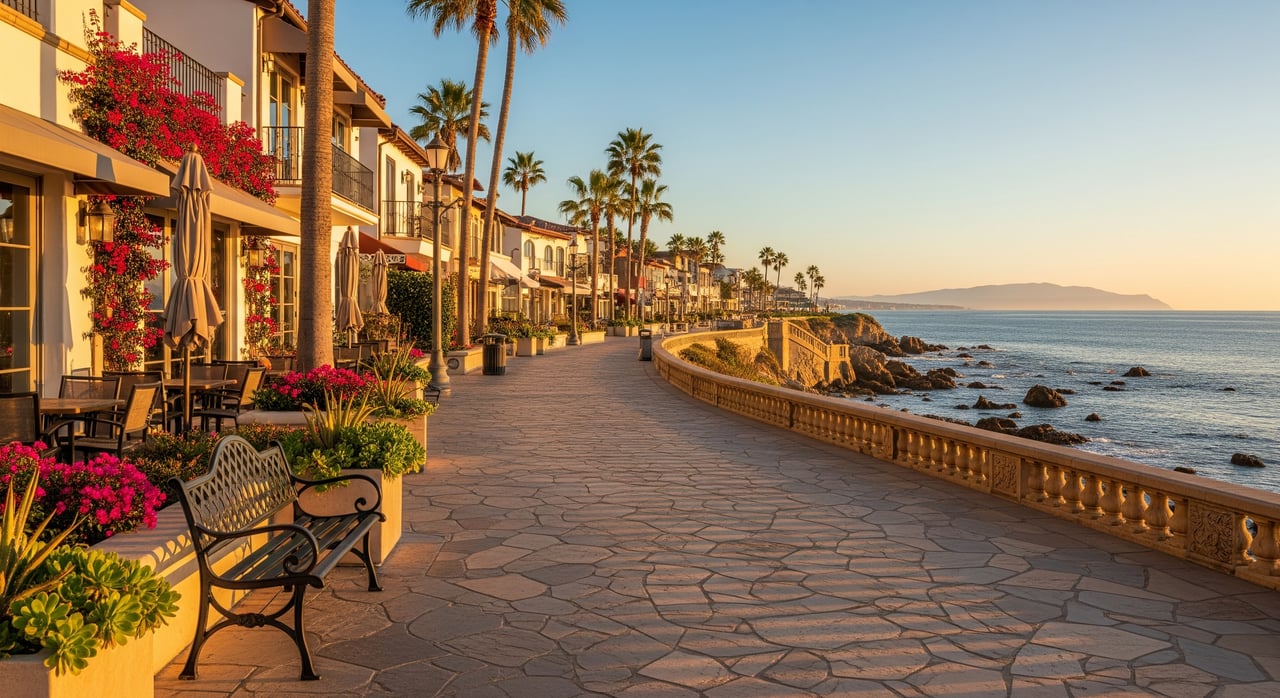
Demand comes from full-time residents, second-home buyers, and investors. In the Village, you may prioritize walkability and proximity to Main Beach, galleries, and Heisler Park. In nearby coves, you might value private beach access and unobstructed panoramas. Limited inventory combined with steady demand creates location-specific view premiums.
Orientation is one of the strongest drivers. West and southwest exposures that capture sunsets and long coastline sweeps usually sit at the top of the desirability list. South-facing corridors that look along the coastline can reveal more shoreline length and feel expansive.
The breadth of the corridor matters. A narrow “sliver” of ocean is not valued the same as a broad panorama. Views that include recognizable local features such as Main Beach, Heisler Park, Crescent Bay, or Catalina Island on clear days can add subjective value because they anchor the view in a sense of place.
Proximity to sand often boosts perceived value. Bluff-edge or near-beach properties feel more immediate than homes several blocks inland, even if both technically see the ocean. Depth also counts. A long, uninterrupted horizon typically beats a view that is broken by structures or vegetation.
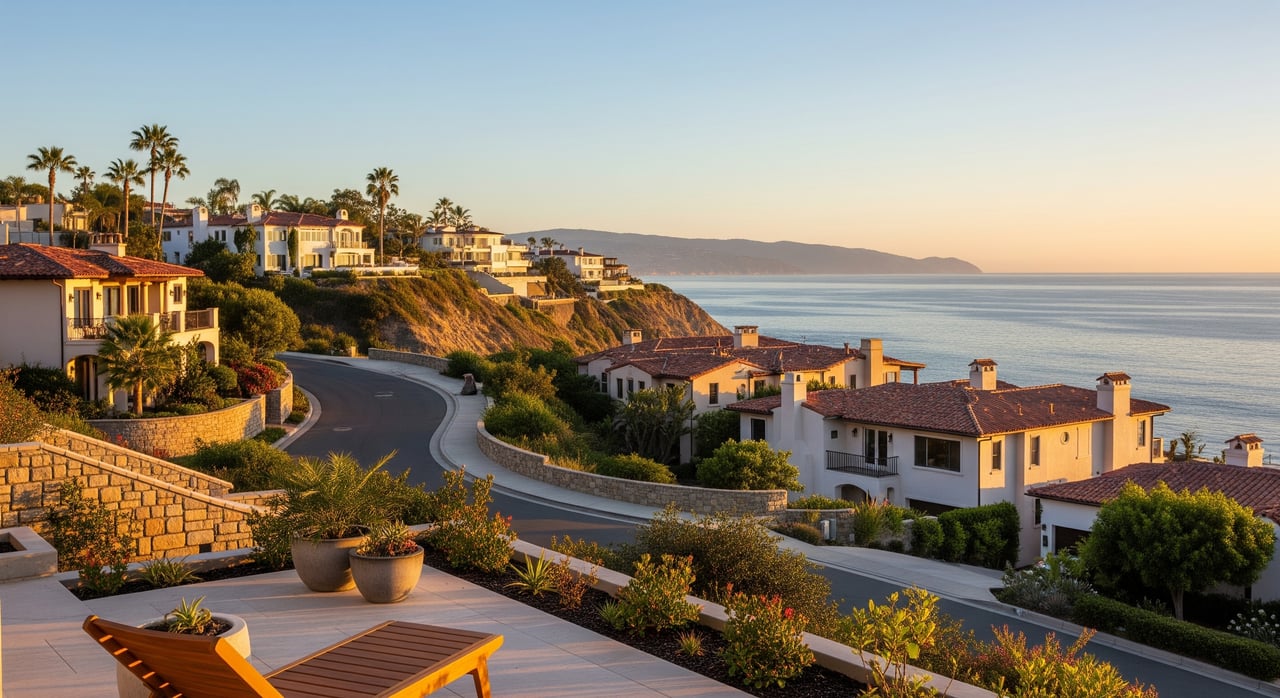
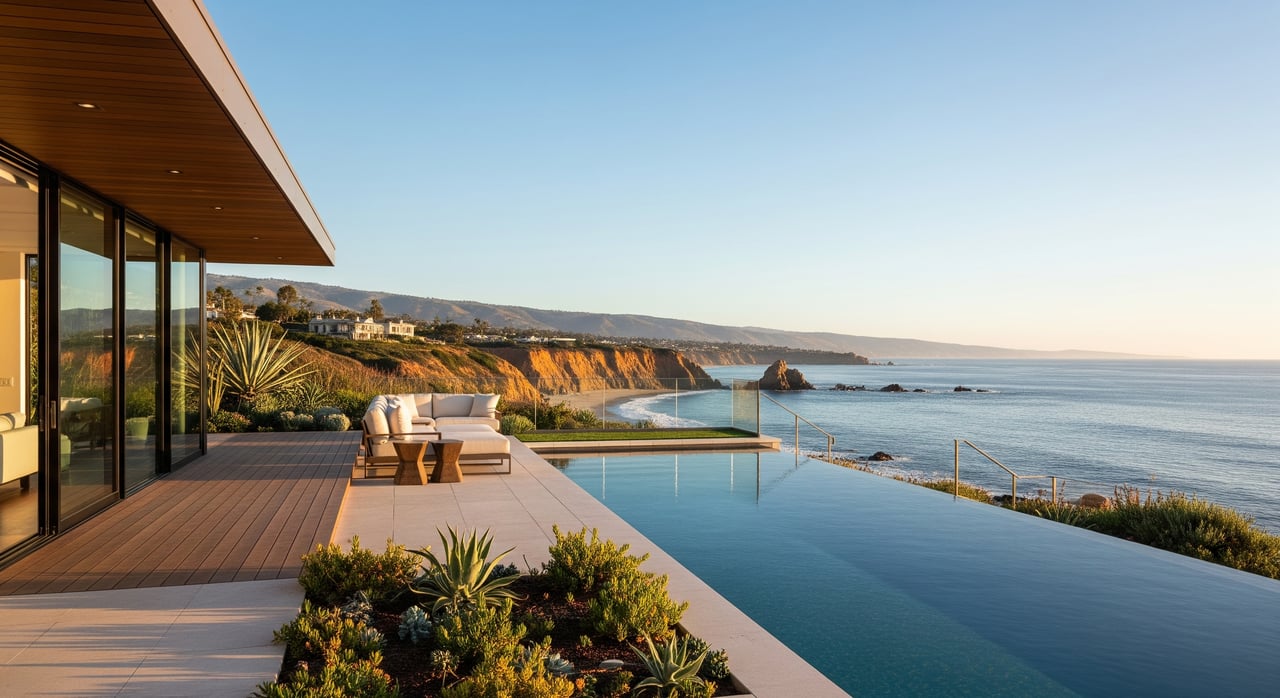
Bluff-top homes offer dramatic, direct exposure with minimal obstruction. They are often considered premium, though they can involve unique risks like erosion and slope stability that affect insurability and future improvements. Hillside properties can deliver sweeping panoramas over roofs and trees, but results vary depending on how the home sits relative to neighbors. Lower elevations or valley positions may have framed or partial views and generally trade at lower view premiums.
Trees, neighboring bulk, and potential future construction can reduce view value. Permanent features, like protected bluffs, are less risky than a nearby vacant parcel that could be developed. In California, legal protections for views are limited. It is important to verify zoning, building envelopes, and any recorded easements for surrounding parcels.
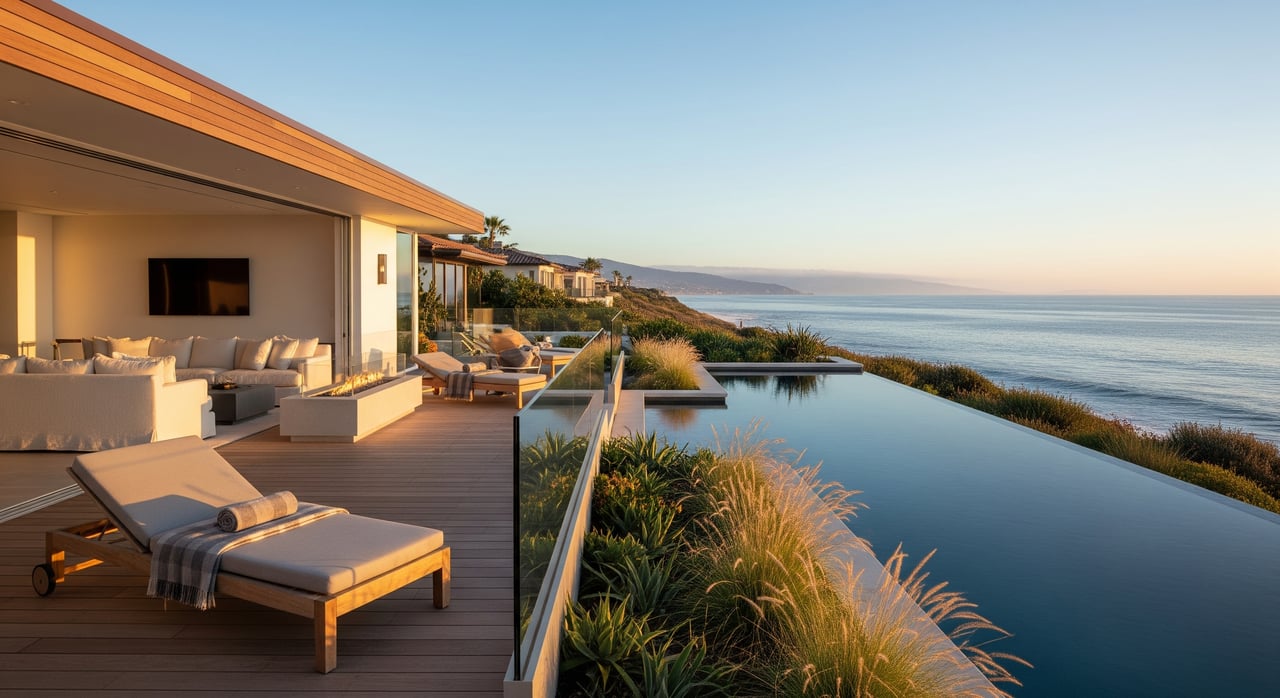
The way a home “extracts” the view can transform value. Large west-facing glass walls, living areas oriented to the ocean, and roof decks can elevate the same physical view into a premium experience. Single-level living that flows to a terrace often outperforms multi-story layouts where primary spaces ignore the ocean.
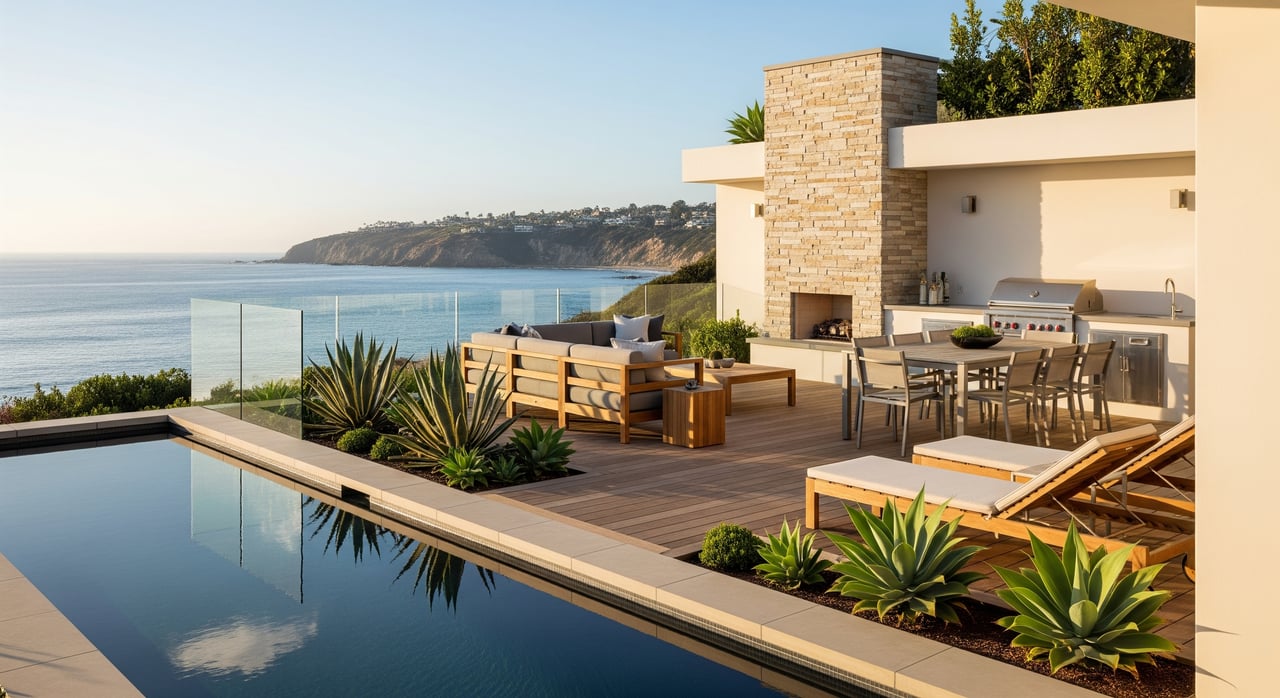
Usable terraces, balconies, and wind-protected outdoor rooms that face the water materially impact price. Direct beach access or a very short walk to sand can add value beyond the visual view alone. Quality outdoor finishes and privacy also make a difference.
Turnkey condition commands a premium. Buyers want to enjoy the view on day one, not plan a major remodel. Upgrades that usually pay back include high-quality glazing that improves sightlines and comfort, plus reconfigurations that align living spaces with the ocean.
In the Village and the coves, on-site parking is a big convenience factor. A strong view can be discounted if parking is limited or access is difficult. Steep roads or long stairs may deter downsizers or anyone who needs easy daily access.
Quiet, private view terraces tend to outperform similar views over busy streets, popular beaches, or high-traffic promenades. The same horizon feels different when you can enjoy it without noise or foot traffic.
Every coastal parcel is unique, so appraisal relies on micro factors such as orientation, elevation, distance to sand, indoor-outdoor design, and parking. Small differences can lead to large adjustments. For exceptional views, there may be few true comps, so local expertise is essential.
Ocean-view inventory in Laguna Beach is limited and often turns over infrequently. Demand can be seasonal, with interest rising in late spring and summer. Broader conditions like interest rates and lifestyle trends, including remote work, can influence how much buyers will pay for the coastal lifestyle.
HOA rules can affect exterior changes that might improve or preserve a view, such as window replacement or deck work. They also govern parking and short-term rental policies, which can shape investor appetite. Fees that cover bluff maintenance, stairs to the beach, or landscaping may be a plus for convenience but still factor into carrying costs.
Bluff erosion, wave run-up, and sea-level rise are real considerations. Buyers often review geotechnical reports and understand local setback rules before proceeding. The City of Laguna Beach and the California Coastal Commission regulate development near the shore, including setbacks and permitting. Insurance availability and costs for flood and wind exposures can influence net ownership costs and therefore price.
Local short-term rental rules evolve over time and can affect investor demand and price ceilings, especially for properties that lend themselves to vacation use. Before pricing or purchasing, it is wise to confirm current municipal requirements.
Use this step-by-step approach to gauge view value before you tour or list.
Use this qualitative assessment to set realistic expectations and narrow your shortlist before you dig into comparables.
Focus on improvements that elevate the experience of the view. Upgrading primary-level glazing, reorienting living areas toward the ocean, and refining terrace finishes often produce outsized returns compared with cosmetic changes in non-view rooms. Document your due diligence so buyers feel confident about hazards, permits, and maintenance.
Quantify the cost to improve view extraction. Window upgrades, terrace enhancements, or selective landscape adjustments, where allowed, can change the feel and value of a home. Use the qualitative framework to compare options and adjust your offer based on what it would cost to achieve your desired experience.
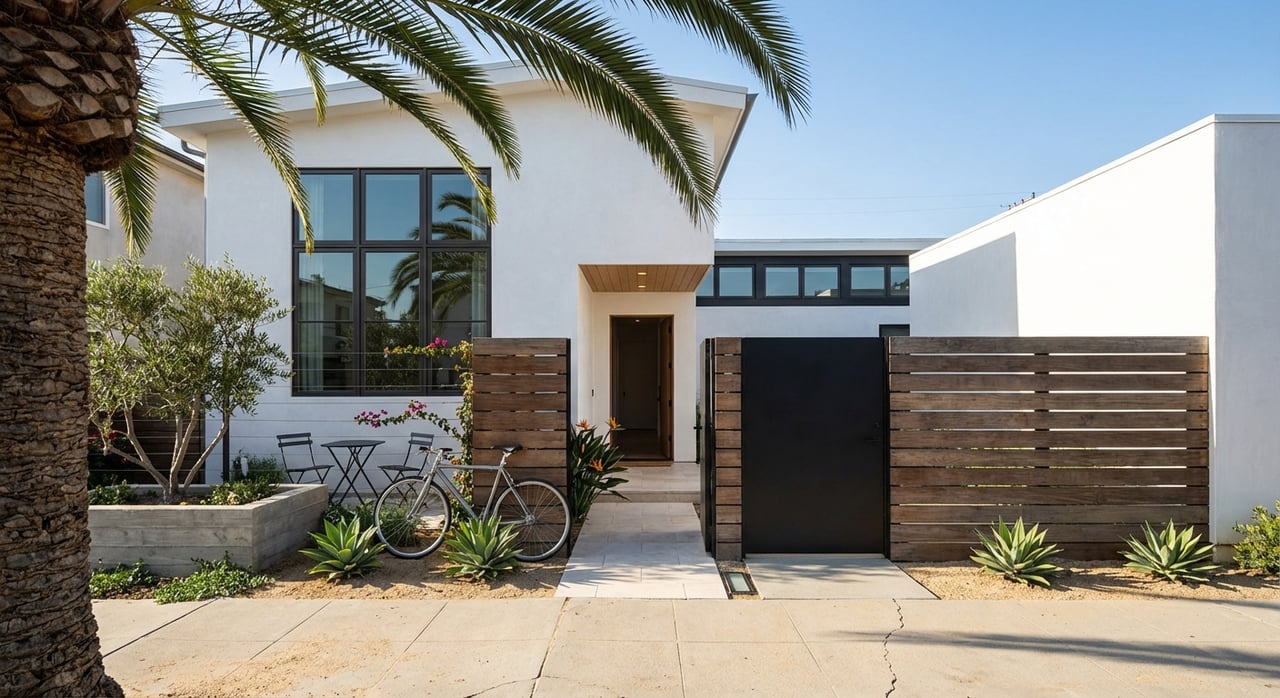
In the Village, walkability and proximity to Main Beach and Heisler Park add lifestyle value. Many homes have framed or partial views, so thoughtful floor plans and terrace design can make a noticeable difference. Parking and access are major convenience factors in daily life.
Along nearby coves, properties with bluff-top positions or direct beach access often earn higher premiums due to immediacy and scope. Views that capture coastline, tidal movement, and Catalina Island on clear days can feel immersive. Privacy and noise exposure vary by street and beach activity, so evaluate at different times of day.
Ocean-view pricing in Laguna Beach is a blend of geography, design, and market context. Orientation, corridor width, elevation, and proximity to sand set the baseline. Architecture, outdoor living, parking, and condition amplify or temper that baseline. Finally, comparables, regulations, hazards, and local rules shape what the market will bear at any given time.
If you want a personalized read on your property or a short list of ocean-view options that match your goals, connect with a trusted local advisor. For thoughtful guidance and private consultation, reach out to Connie Maxsenti. Let’s Connect - Schedule Your Free Consultation.
Stay up to date on the latest real estate trends.
Luxury real estate specialist. With years of experience and a track record of success, I am here to exceed your expectations. Contact me today to start your home searching journey!