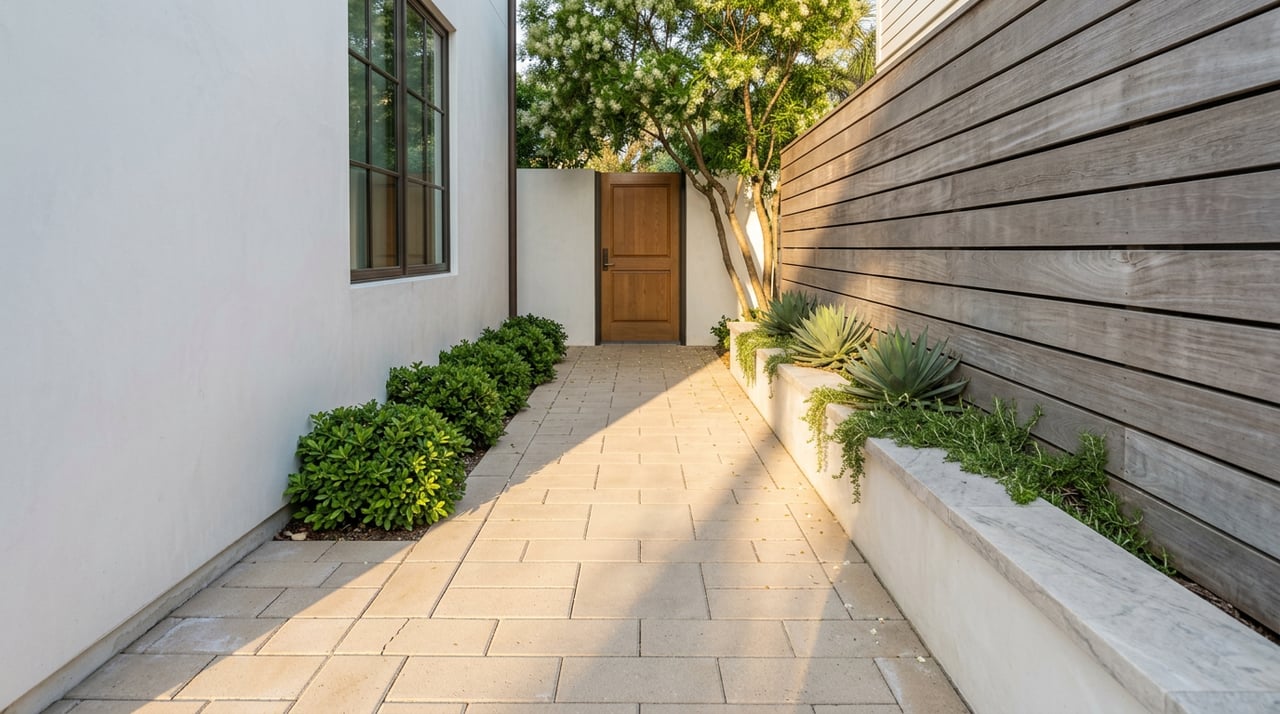
The Real Difference Between Lido Isle and Balboa Island Isn't the Price Tag
September 3, 2026
September 3, 2026
"Most lots on Lido are about 30 feet wide. This is over twice that, so it just feels like a real home." That's how one Coldwell Banker Realty agent described a rare 70-foot-wide parcel on Lido Isle that closed for $10 million in a deal reported by the Orange County Business Journal this spring. The buyer, a longtime coastal homeowner relocating from Huntington Harbor, wanted a Spanish-style house with room to spread out. What made the listing newsworthy wasn't the price. It was the lot.
That's the thing about comparing Lido Isle and Balboa Island, Newport Harbor's two most walkable, most photographed island enclaves. Buyers cross-shopping them almost always start with price per square foot, and almost always end up confused, because the number that actually separates these two islands has nothing to do with square footage. It has to do with how each one pays its bills.
Both islands sit inside Newport Harbor, both are dense with cottages and rebuilds, and both trade well above the rest of Newport Beach. But the mechanism behind each island's carrying cost is structurally different, and it's the kind of thing a portal listing never surfaces.
| Lido Isle | Balboa Island | |
|---|---|---|
| Access | One bridge, no through traffic | Marine Avenue bridge, plus a ferry to the Peninsula |
| Governing structure | Mandatory Community Association, all owners are members | Voluntary improvement association (BIIA) |
| What it funds | Private clubhouse, bay beach, tennis courts, Lido Isle Yacht Club | Civic events, beautification, advocacy with the city |
| Big shared cost | Ongoing annual assessment | One-time or 20-year utility undergrounding lien |
| Layout | About 800 homes, roughly 250 of them waterfront | Big Island and Little Island, joined by a small bridge |
Lido Isle was platted in the 1920s as a private Mediterranean-style resort community, with streets named after Barcelona, Genoa and Nice, and it still functions that way. Every property owner is automatically a member of the Lido Isle Community Association and pays into it. That association owns and runs the clubhouse, the private bay beach, the tennis courts and the summer sailing program through the Lido Isle Yacht Club, founded in 1928. It's a real, recurring cost baked into ownership regardless of what you paid for the house.
Balboa Island never built that structure. The Balboa Island Improvement Association, or BIIA, is a century-old civic organization, but membership is voluntary and dues-based rather than a title-recorded obligation. Instead of a private clubhouse, Balboa Island residents share Marine Avenue's shops and a public bayfront walk. When the island needed a major shared improvement, it didn't come from association dues. It came from the City of Newport Beach.
Before getting to that improvement, it's worth pausing on why the headline prices for these two islands bounce around so much from source to source. It isn't because the market is unstable. It's because so few homes trade on either island in any given month that one closing can move the "median" by double digits.
On Lido Isle, tracking services reported just 2 homes sold in March 2026, down from 6 the year before, at a median of $7.4 million. A separate count for June 2026 put the median at $5.85 million with an average sale price of $6.73 million and homes taking 73 days to sell. A third count of active listings the same season showed asking prices ranging from just under $4 million to nearly $17.9 million across only 7 homes on the market. None of these numbers are wrong. They're measuring different months, different samples and, in one case, asking price instead of sold price, on an island where total inventory rarely cracks double digits.
Balboa Island tells the same story from the other direction. One tracking service put the three-month median ending June 2026 at $3.8 million, down 18 percent year over year, with price per square foot down more than half. Another put the median closer to $4.66 million, essentially flat year over year. A subset covering just Little Balboa Island reported a median of $5.8 million in February 2026, up 94.6 percent from the year before, a swing that only makes sense once you look at how few homes actually change hands on the island in a given month. Balboa Island as a whole recorded 11 sales in June 2026, up from 6 the year before, which sounds like healthy growth until you remember that a single high-end bayfront closing sitting next to a smaller interior sale can swing a median like that by double digits without the underlying market moving at all.
The takeaway isn't to ignore the data. It's to treat any single month's median on either island as a data point, not a verdict, and to look instead at more stable signals: typical lot width, bridge access, and what a specific block or frontage has actually traded for over a longer stretch.
Here's the transaction detail that catches out-of-town buyers off guard, and it's specific to Balboa Island. The Newport Beach City Council formed Underground Utility Assessment District No. 124, a 50-block undergrounding project covering central Balboa Island, at an estimated $32.8 million in construction and financing costs, with individual parcels assessed according to size, averaging roughly $34,000 per parcel. Property owners had the option to prepay the full assessment in cash or let it ride as a line item on their property tax bill for up to 20 years, with a lien attached to the parcel until the bond is paid off. For about 70 percent of properties in the district, the prepay figure worked out closer to $30,000.
Construction started in 2020, according to the project committee's own updates, and by this year it was effectively wrapped up. BIIA's newsletter reported that the final utility vault on Balboa Avenue had just been installed, closing out work that began with a resident-led petition years earlier.
What this means for a buyer today is straightforward but easy to miss. If you're writing an offer on a home inside that assessment district, your preliminary title report and your seller's property tax bill will show whether the lien has been paid off in full or is still riding along as an annual charge. It's not a red flag. It's a fact to confirm before you're deep into escrow, the same way you'd confirm any other assessment or bond attached to a parcel. Lido Isle buyers don't face this particular question, because its underground utilities were part of the original 1920s build-out. Balboa Island's came nearly a century later, financed a different way, and only just finished.
Once you set aside the raw median and look at mechanism instead of price, the two islands start to make more sense as genuinely different products rather than two versions of the same thing.
Lido Isle buys you a mandatory, semi-private community with a clubhouse, a private beach, tennis courts and a yacht club, funded by dues that continue for as long as you own the house. It buys you a single bridge and the quiet that comes with limited through traffic. It buys you streets named for Mediterranean cities and a build-out from the 1920s that was underground from day one.
Balboa Island buys you Marine Avenue, walkable and commercial in a way Lido Isle deliberately isn't, along with a civic association you can choose to join rather than one you're required to fund. It also, as of this year, buys you a freshly undergrounded utility system that a prior generation of owners voted to finance through the city rather than through a private association, and whose remaining costs, if any, will show up on the title report rather than in a dues statement.
Before writing an offer on either island, a few questions are worth asking directly rather than assuming the listing sheet covers them:
Does the Balboa Island utility assessment transfer to a new owner? If the lien hasn't been paid off, yes. It's tied to the parcel, not the individual owner, which is why confirming its status through escrow matters.
Is Lido Isle's Community Association assessment optional if I plan to rent the home out? No. Membership and the assessment attach to the property itself, per the island's governing documents, regardless of whether the owner occupies it or leases it.
Which island has better resale value? Neither has a clear edge once you account for how few homes sell on each in a given month. Longer-term price-per-front-foot trends, particularly for bayfront parcels, are a more reliable read than any single month's median.
Comparing Lido Isle and Balboa Island on price alone tells you which one costs more this quarter. It doesn't tell you what you're actually signing up to fund, or for how long. That distinction is worth working through with someone who has watched both islands long enough to know which numbers move because the market shifted and which ones move because six homes sold instead of two.
If you're weighing these two Newport Harbor addresses, or any of the enclaves around them, Connie Maxsenti can walk you through the current inventory, the assessment history on a specific block, and what the next chapter of ownership actually costs. Let's Connect — Schedule Your Free Consultation.
Stay up to date on the latest real estate trends.



Luxury real estate specialist. With years of experience and a track record of success, I am here to exceed your expectations. Contact me today to start your home searching journey!